
7 Coastal Sunset Locations Worth Traveling For and How to Plan Each Shoot
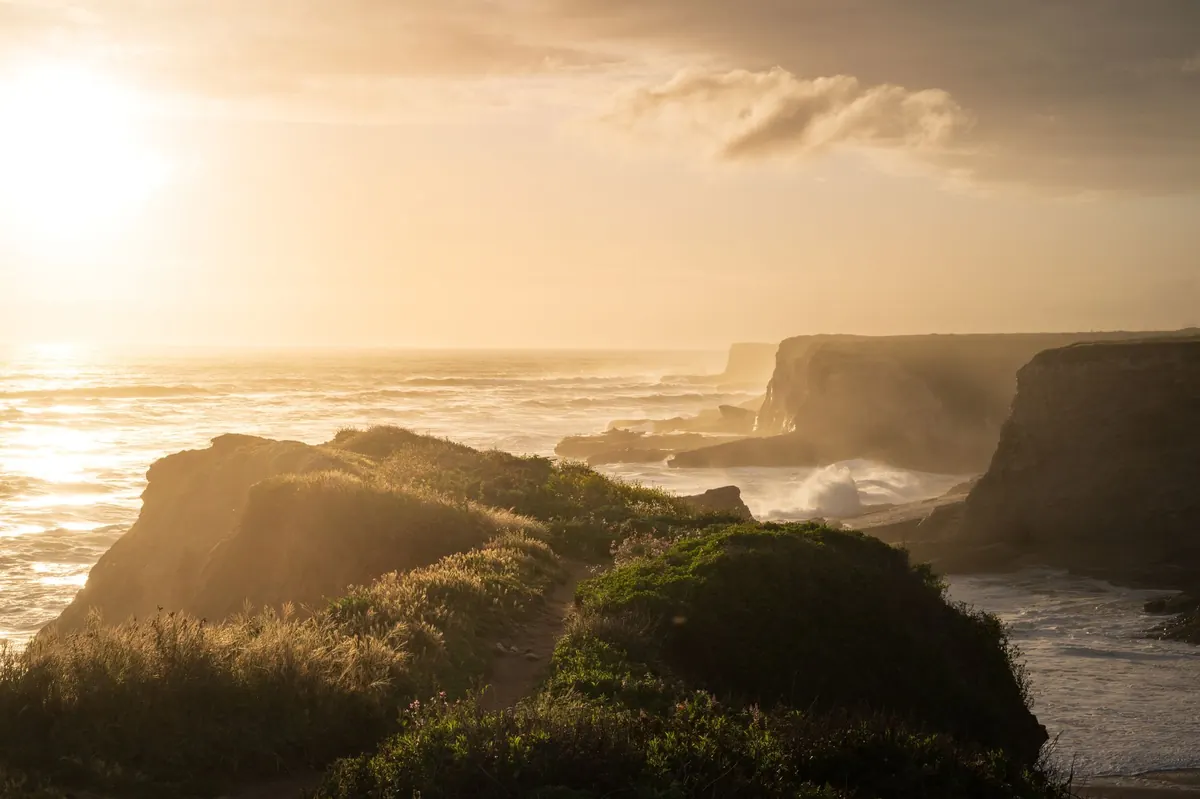
Coastal sunsets are easy to shoot badly and hard to shoot well, and the difference is rarely the camera. It is almost always whether you were standing in the right place forty minutes before the light turned, with dry feet and a level tripod. The seven coasts below are worth a flight, a long drive or a ferry crossing. Each one also punishes careless planning in its own way, which is the useful part.
1. Étretat, Normandy, France
Chalk cliffs, the great arch of the Porte d'Aval, and the needle of L'Aiguille standing offshore like a spar. In the evening the light comes in low off the Channel and rakes the white cliff face until it glows, while the sea below turns a flat, silvery blue.
How to plan it: tide is the whole story here, and the Channel tides are big. At high water the beach shrinks to a strip of pebbles and you shoot from the sea wall; at low water you can walk out and frame the needle inside the arch. Check the tide table for the day, note the height as well as the time, and aim for a low tide that falls an hour or two before sunset. The cliff-top path gets gusty, so weight your tripod. In June the sun sets close to 22:00 — bring a headlamp for the walk back up.
2. Praia da Marinha, Algarve, Portugal
The clifftop path above the beach is one of the best free viewpoints in southern Europe: golden limestone pillars, a natural arch cut into the headland, and a small beach tucked below. The sun drops straight out to sea for much of the year, so cloud matters more than alignment.
How to plan it: skip the beach and work the cliff top, ten minutes' walk from the car park. Arrive ninety minutes early, claim your patch of rock, and shoot two focal lengths — a wide for the whole bay, a longer lens to compress the sea stacks. The edges are crumbly and unrailed, so keep back from the lip and never step onto wet limestone. At low tide you can descend to the sand for a lower angle; at high tide the beach is narrow and the swell reaches the base of the cliff.
3. Cannon Beach, Oregon, USA
A wide flat beach, a monolith rising out of the surf, and — at low tide — wet sand that behaves like a mirror. The classic frame is simple and hard to improve on: the rock centred, its reflection below, a band of colour above.
How to plan it: low tide is the window, both for the reflection and for the tide pools around the base of the rock. Shoot the pools without stepping on anything alive, and keep off the wet algae. Summer fog is common on this coast, so build in a spare evening. Wind comes off the Pacific without a break; hang your bag from the tripod hook and wipe the front element between frames. Run a sun-position check before you go — the sun's path shifts noticeably between spring and midsummer here.
4. Pfeiffer Beach, Big Sur, California, USA
Purple-tinted sand, a wave-cut arch at the north end, and surf that funnels through the opening. For a few weeks either side of the winter solstice, the setting sun lines up with the keyhole and the arch fills with light.
How to plan it: that alignment draws a crowd, and the access road is narrow, single-lane and unforgiving in the dark. Come two hours before sunset or come in a different season and shoot the arch as a silhouette instead. Check the park's current opening hours and gate times before you commit — they change with the season. Bring a long lens for the compressed view from the north end, and something to cover the camera between sets of spray.
5. Manarola, Cinque Terre, Italy
The village stacks its painted houses on a black rock above the harbour, and in the last hour of light the facades hold a warmth that no filter reproduces. The classic viewpoint is on the path toward Corniglia, above the village.
How to plan it: the sun disappears behind the ridge rather than into the sea, so the best frame often arrives twenty or thirty minutes after the sun is gone, when the sky above the village turns rose and the windows start to glow. The viewpoint is small — arrive early, set up once, and keep your tripod legs out of the path. Some trails in the park require a card, so check locally. Confirm the time of the last train back before you settle in.
6. Reynisfjara, Iceland
Black sand, basalt columns stacked like organ pipes, and the Reynisdrangar sea stacks standing offshore. The sea here is not decorative. Sneaker waves run far up the beach without warning, and the wet sand is slick.
How to plan it: never turn your back on the water, stay well back from the edge of the surf, and keep out of the cave when the sea is working. Read the signs and the beach's warning system before you walk out. Photographically, sunset is a moving target: midsummer nights barely darken, so aim for late August or March, when the sun is low and the twilight lasts. A six- or ten-stop filter gives you the long exposure that turns the surf into mist around the stacks.
7. Elgol, Isle of Skye, Scotland
A short walk from the road brings you to shore rocks that look straight across Loch Scavaig at the Black Cuillin. In the evening the ridge takes the last light while the water goes slate grey and the foreground boulders go nearly black.
How to plan it: treat the weather as the subject. A flat, clear forecast gives you a dull sky; broken cloud after rain is what you want. The single-track road has passing places, so leave time and park without blocking anyone. A falling tide exposes more foreground rock, which is the composition here. In summer, bring midge repellent and a hood — the wind is your friend on that shore.
How to Build the Plan for Any Coastal Sunset
Three variables decide whether an evening works: tide, sun position and access. Fix them in that order.
Start with the tide, not the sun
Get the table from the national hydrographic service or a local harbour office, and read the range, not just the times. A spring tide gives you an extreme low and an extreme high; a neap tide gives you neither. Match the water to the picture you want: reflections and rock pools need low water, spray and drama need a rising tide.
Put the sun where you want it
Use a sun-position tool to check the compass bearing of sunset on your date against the bearing of your subject. If the shot depends on a specific alignment — through an arch, over a needle — work out the weeks it happens and book around them.
Scout in daylight, then again the day before
Walk the location in the afternoon, find three compositions, and note where you stood for each. Then return at the same hour as your shoot to check the walk out in failing light.
Pack for the coast specifically:
- Headlamp, plus a spare battery
- Offline screenshots of the tide table and sunset time
- Tripod with a hook, and a
Photo: Zetong Li / Pexels